Evaluating Swimming Pool Seamless Patterns for Digital Design Projects
In the realm of digital graphic design, the ability to create expansive, uninterrupted backgrounds is a fundamental skill. Among the various textures and motifs available to designers, Swimming Pool Seamless Patterns have emerged as a versatile asset for both commercial and personal creative endeavors. These patterns offer a distinct aesthetic that evokes summer leisure, aquatic clarity, and modern minimalism. For professionals and hobbyists alike, understanding the technical specifications, application potential, and limitations of these assets is crucial before integrating them into a workflow.
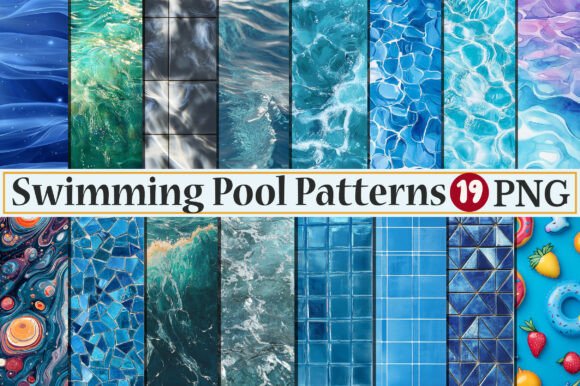
This analysis explores the utility of high-resolution seamless pattern collections, specifically focusing on a set comprising 19 PNG files at 300 DPI with dimensions of 12×12 inches. By examining the technical attributes and practical use cases, we can determine how these resources fit into broader design strategies compared to vector-based alternatives or lower-resolution stock imagery.
Technical Specifications and File Integrity
The foundation of any effective seamless pattern lies in its resolution and file format. The specific collection in question provides 19 individual PNG files, each rendered at 300 DPI (dots per inch) with a physical dimension of 12×12 inches. This specification is significant for several reasons regarding print quality and scalability.
- Resolution Standards: A 300 DPI standard is the industry benchmark for high-quality printing. At this density, pixelation is virtually undetectable to the naked eye when viewed at a normal reading distance. This makes the Swimming Pool Seamless Patterns suitable for merchandise that requires crisp detail, such as tote bags, pillows, and framed artwork.
- File Format Advantages: The use of PNG (Portable Network Graphics) ensures support for transparency. Unlike JPEG formats, which often introduce compression artifacts and lack alpha channels, PNGs allow the pattern to be layered over other elements without a distracting white background box. This is particularly useful when designing cards or combining multiple texture layers.
- Dimensional Consistency: The 12×12 inch square format is a standard size in scrapbooking and digital paper industries. It allows for easy tiling in software like Adobe Photoshop or Illustrator. When repeated, the edges align perfectly, creating an infinite surface area from a single tile.
However, it is important to note that while 12×12 inches is sufficient for many applications, it may not be large enough for massive backdrops or full-page book covers without further upscaling. Designers must consider whether their final output requires larger base tiles or if they are comfortable using interpolation tools to expand the image.
Comparing Raster Patterns to Vector Alternatives
When selecting design assets, creators often face a choice between raster images (pixel-based, like the PNGs described) and vector graphics (mathematically defined paths). Understanding the tradeoffs between these two categories helps in making an informed decision about when to utilize Swimming Pool Seamless Patterns.
Advantages of Raster-Based Pool Patterns
Raster seamless patterns excel in capturing complex visual details that are difficult to replicate with vectors. Water reflections, subtle tile grout lines, and organic light refractions are naturally suited to pixel-based rendering. If a designer seeks a photorealistic or highly textured look—such as the shimmer of water or the roughness of poolside stone—a raster PNG collection is often the superior choice. The 19 variations provided in this set likely cover a range of styles, from geometric tiles to abstract water effects, offering variety that might require extensive custom illustration if created from scratch.
Limits of Scalability
The primary limitation of raster patterns is scalability. While 300 DPI is excellent for print sizes up to 12×12 inches, enlarging the pattern beyond this point will result in visible pixels unless advanced AI-upscaling tools are employed. In contrast, vector patterns can be scaled to the size of a billboard without loss of quality. Therefore, if the end goal involves large-format signage or outdoor banners, vector-based swimming pool designs would be more appropriate. For smaller items like mugs, stickers, and t-shirts, however, the raster options remain cost-effective and visually rich.
Practical Applications and Creative Use Cases
The versatility of these digital assets extends across a wide array of product categories. Because Swimming Pool Seamless Patterns evoke feelings of relaxation and vacation, they are particularly effective in seasonal marketing materials and lifestyle-oriented products.
Apparel and Accessories
Print-on-demand services frequently utilize seamless patterns for all-over prints on t-shirts and tote bags. The transparent background of the PNG files allows designers to overlay text, logos, or other graphics directly onto the pool pattern without masking out a solid color block. This layering capability is essential for creating dynamic compositions where the pattern serves as a texture rather than just a flat background.
Home Decor and Stationery
Pillows and framed artwork benefit from the high resolution of these files. When printed on fabric or canvas, the 300 DPI ensures that fine details, such as the edge of a diving board or the ripple of water, remain sharp. Similarly, in stationery design, these patterns can serve as borders or full-page backgrounds for greeting cards. The "instant download" nature of the product means that designers can quickly iterate through different colorways and layouts to find the best fit for their brand identity.
Digital Media and Web Design
Beyond physical goods, these patterns are valuable for web design and social media content. Although web images typically require lower resolutions (72 DPI) to reduce load times, having a high-res source allows for flexibility. Designers can downscale the 12×12 inch PNGs for web use while retaining the original high-quality files for future print projects. This dual-purpose utility adds value to the initial purchase.
Decision Factors: When to Choose This Resource
Selecting the right design asset depends on specific project requirements. Here are key factors to consider when evaluating Swimming Pool Seamless Patterns against other options.
- Project Scale: If your project involves printing items smaller than 12×12 inches or requires cropping the pattern, this resource is ideal. For larger continuous surfaces, ensure you have the capability to tile and upscale effectively.
- Aesthetic Preference: If you prefer realistic textures, lighting effects, and detailed imagery over clean, geometric vector lines, raster PNGs are the better choice.
- Workflow Efficiency: For designers who need immediate access to ready-to-use textures without spending hours creating custom brushes or searching for royalty-free stock photos, a curated bundle of 19 patterns offers significant time savings.
- Color Accuracy: As noted in the product description, actual colors may vary slightly due to monitor settings. This is a universal challenge in digital design. To mitigate this, always proof-print samples before committing to large production runs, especially for merchandise like mugs and pillows where color fidelity is critical to customer satisfaction.
Limitations and Considerations
While Swimming Pool Seamless Patterns offer substantial benefits, there are inherent limitations to keep in mind. First, the static nature of PNG files means they lack the interactivity of animated GIFs or video loops. If a project requires moving water or dynamic lighting effects, this asset will not suffice; alternative motion graphics resources would be necessary.
Secondly, the diversity of the 19 patterns should be evaluated based on the specific niche. If a designer is looking for highly specialized themes, such as infinity pools overlooking oceans or rustic wooden decks, they must verify that the collection includes these specific variations. Generic blue water patterns may not provide enough differentiation for brands seeking a unique visual identity.
Finally, the digital-only nature of the product means there is no physical sample to inspect. Buyers rely entirely on preview images and descriptions. It is advisable to test one pattern file in a mockup template before purchasing the entire set to assess resolution quality and color tone relative to your specific printer or display setup.
Conclusion
The choice between different design assets ultimately hinges on the balance between quality, versatility, and budget. Swimming Pool Seamless Patterns, presented as a set of high-resolution PNG files, provide a robust solution for designers working within the raster domain. They offer the necessary detail for print-ready merchandise and the flexibility for digital composition. While they do not replace the infinite scalability of vector graphics, they fill a critical niche for textured, realistic backgrounds. By understanding the technical constraints and creative possibilities outlined above, designers can confidently integrate these patterns into their workflows, enhancing their projects with professional-grade aquatic aesthetics.