Evaluating Minimalist Modern Seamless Patterns for Professional Design Projects
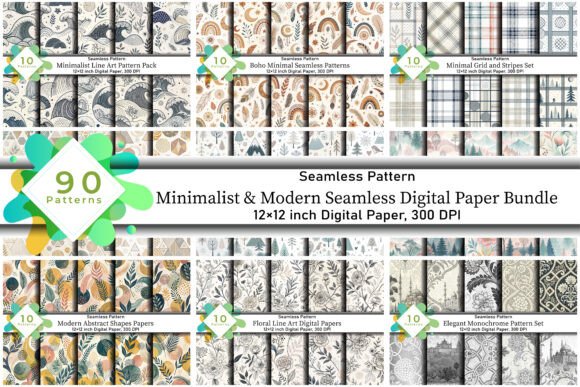
In the landscape of contemporary graphic design, visual clarity and aesthetic restraint have become paramount. The demand for clean, uncluttered visuals is not merely a trend but a functional necessity in digital interfaces, branding, and print media. Within this context, Minimalist Modern Seamless Patterns have emerged as a critical resource for designers seeking to add texture and depth without compromising readability or visual hierarchy. This article provides a comprehensive evaluation of these patterns, specifically focusing on curated collections such as the Minimalist Modern Seamless Digital Paper Bundle 90 Designs, to help professionals and hobbyists make informed decisions about their creative toolkits.
Defining Minimalist Modern Seamless Patterns
At its core, a minimalist modern seamless pattern relies on the principle that less is often more. Unlike ornate or baroque designs that rely on complex layering and dense detail, minimalist patterns utilize negative space, simple geometry, and restrained color palettes to create visual interest. The term "seamless" refers to the technical capability of the pattern to tile infinitely in any direction without visible breaks or seams, making it ideal for backgrounds, textures, and wrapping surfaces.
The distinction between generic patterns and high-quality minimalist designs lies in execution. A well-crafted minimalist pattern balances rhythm and asymmetry. It avoids being too static (which can look boring) or too chaotic (which defeats the purpose of minimalism). The Minimalist Modern Seamless Digital Paper Bundle 90 Designs exemplifies this balance by offering a diverse range of styles—from strict geometric grids to organic, hand-drawn lines—all unified under a cohesive modern aesthetic.
Key Characteristics of High-Quality Minimalist Patterns
- Restraint in Color: Effective use of neutral tones like taupe, ivory, soft grey, and beige, alongside strategic pops of color such as mustard yellow, dusty pink, or terracotta.
- Clean Line Work: Precise vector-like lines or intentional hand-drawn imperfections that convey elegance rather than clutter.
- Scalability: Patterns that maintain integrity whether viewed on a small mobile screen or printed on large-scale packaging.
- Versatility: Designs that complement text and other graphical elements without overpowering them.
Comparing Pattern Styles: Which Approach Fits Your Project?
When evaluating resources like the 90-design bundle, it is essential to understand the different sub-styles available. Not all minimalist patterns serve the same function. Below is an analysis of the primary categories found in top-tier bundles, helping you determine which style aligns with your specific project needs.
Minimalist Line Art vs. Geometric Precision
One of the most significant trade-offs in pattern selection is between organic flow and structural rigidity. The bundle includes both Minimalist Line Art Patterns and Neutral Geometric Seamless Backgrounds, each serving distinct purposes.
Line Art Patterns feature elegant black lines on white or beige backgrounds. These are characterized by continuous line art, waves, and hand-drawn shapes. They are particularly effective for branding materials that aim to feel personal, artisanal, or approachable. For instance, a boutique skincare brand might choose line art to suggest natural ingredients and human touch. However, line art can sometimes lack the visual weight needed for bold headers or primary background layers, requiring careful placement to avoid looking sparse.
In contrast, Geometric Patterns offer stability and professionalism. Featuring triangles, circles, hexagons, and chevrons in muted earth tones, these patterns provide a calming yet structured backdrop. They are ideal for corporate branding, financial services, or tech startups where trust and order are key messaging goals. The trade-off here is that geometric patterns can feel colder or more impersonal if not paired with warm typography or imagery.
Abstract Shapes and Boho Minimalism
For designers seeking to inject personality into a minimalist framework, Modern Abstract Shapes and Boho Minimal Seamless Patterns offer viable alternatives. Abstract shapes utilize organic blobs, overlapping forms, and brush strokes in trendy colors like navy, olive green, and sienna. This style bridges the gap between rigid minimalism and expressive art, making it suitable for creative agencies, fashion labels, or lifestyle blogs.
Boho Minimal patterns introduce celestial and nature-inspired elements—moons, stars, feathers, and rainbows—set against earthy hues. While still minimalist in execution, these patterns carry a stronger emotional resonance. They are best suited for wedding invitations, spiritual wellness brands, or children’s products. The limitation of this style is its specificity; boho elements may clash with ultra-modern, industrial, or high-tech design themes.
Evaluating Technical Specifications and Usability
Beyond aesthetics, the technical quality of digital paper bundles dictates their utility in professional workflows. When comparing options, several factors must be considered: resolution, file format, and ease of integration.
Resolution and Print Readiness
A common pitfall for amateur designers is using low-resolution assets that pixelate when scaled. The Minimalist Modern Seamless Digital Paper Bundle 90 Designs addresses this by providing files at 300 DPI and a resolution of 3600 x 3600 pixels (12 x 12 inches). This specification ensures that the patterns are print-ready for high-quality outputs such as business cards, brochures, and packaging. For web-only projects, these high-res files can be downsized without loss of quality, offering future-proof flexibility.
File Format and Workflow Integration
The inclusion of 90 JPG files is a practical choice for broad compatibility. JPEGs are universally supported across design software, from Adobe Illustrator and Photoshop to Canva and Microsoft PowerPoint. While vector formats (like AI or EPS) allow for infinite scaling and easier editing of individual elements, raster images (JPGs) are often preferred for quick background application and texture overlaying. The absence of watermarks in these files is a critical advantage, ensuring that the final output remains clean and professional without the need for additional editing steps.
Use Cases and Application Scenarios
To determine if this type of resource is right for you, consider how these patterns integrate into various design disciplines. The versatility of minimalist modern patterns allows them to span multiple industries.
- Branding and Identity: Use subtle geometric or line art patterns as secondary elements in logos, letterheads, or business cards to add texture without distracting from the main logo.
- Packaging Design: Seamless patterns are perfect for wrapping paper, product boxes, and labels. The 12x12 inch size is standard for many mockup templates, allowing designers to visualize their work quickly.
- Digital Content Creation: Bloggers and social media managers can use these patterns as backgrounds for infographics, Pinterest pins, or website headers. The neutral tones ensure that overlaid text remains legible.
- Stationery and Invitations: The boho and abstract styles are particularly effective for wedding suites, event programs, and greeting cards, where a tactile, handcrafted feel is desired.
Decision Factors: When to Choose Minimalist Modern Patterns
Selecting a design asset requires balancing aesthetic goals with practical constraints. Here are scenarios where a bundle like the Minimalist Modern Seamless Digital Paper Bundle is the optimal choice, and when you might consider alternatives.
Optimal Fit
This resource is ideal for designers who value efficiency and cohesion. If you are working on a project that requires multiple background variations but must adhere to a strict brand color palette, a curated bundle ensures consistency. The variety within the bundle—from Scandinavian hygge icons to modern abstract blobs—allows for thematic shifts without introducing jarring visual elements. Furthermore, the high resolution makes it suitable for clients who require print-ready deliverables immediately.
Limitations and Alternatives
However, there are limitations. If your project requires fully editable vector shapes to modify specific elements (e.g., changing the color of a single triangle in a geometric pattern), raster JPGs will not suffice. In such cases, purchasing individual vector assets or learning to create custom SVG patterns may be necessary. Additionally, if your brand identity relies heavily on vibrant, saturated colors and bold maximalist graphics, the neutral and muted tones of minimalist patterns may feel too subdued. In those instances, exploring bold, colorful pattern libraries would be a better fit.
Conclusion
The Minimalist Modern Seamless Patterns category offers a robust solution for designers seeking elegance, simplicity, and versatility. By understanding the distinctions between line art, geometry, abstraction, and boho styles, professionals can select assets that enhance rather than distract from their core message. With high-resolution, watermark-free files, bundles like the 90-design collection provide significant value for both digital and print applications. Ultimately, the decision to incorporate these patterns should be guided by the specific tonal requirements of the project, ensuring that every design element contributes to a cohesive and impactful visual narrative.