Phulkari Style Seamless Patterns 05: Elevating Your Designs with Authentic Indian Craftsmanship
In the world of graphic design and textile arts, finding a balance between cultural authenticity and modern versatility is often a challenge. Many creators struggle to incorporate ethnic elements without making their work look dated or overly cluttered. This is where Phulkari Style Seamless Patterns 05 steps in as a sophisticated solution. Inspired by the age-old embroidery art of Punjab, this curated set of 30 designs does more than just add color; it injects historical significance and vibrant energy into your projects. Whether you are a fashion designer looking for the next season’s print, a marketer aiming to create culturally resonant campaigns, or a hobbyist crafting unique home decor, understanding how to leverage these patterns effectively can transform your output.
Understanding the Phulkari Aesthetic
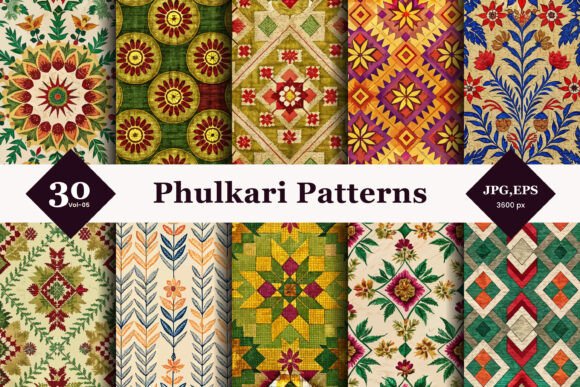
Before diving into technical applications, it is crucial to appreciate what makes Phulkari distinct. Originating from the Punjab region, Phulkari translates to "flower work." Traditionally, women would embroider intricate geometric and floral motifs on cotton fabric using silk threads. The result was a burst of color that symbolized joy, celebration, and heritage. Phulkari Style Seamless Patterns 05 captures this essence digitally, preserving the meticulous detail of hand-embroidery while adapting it for contemporary use.
The collection features 30 unique patterns, each designed to be seamless. This means they can tile infinitely without visible breaks, making them ideal for wrapping around products, creating background textures for websites, or generating full-yard prints for garments. The digital adaptation allows for a level of precision and consistency that manual replication might lack, yet it retains the organic feel of traditional craftsmanship.
Common Pitfalls When Using Ethnic Pattern Assets
While the visual appeal of Phulkari-inspired designs is undeniable, integrating them into professional workflows requires more than just dragging and dropping an image. Beginners and even some experienced designers often make critical errors that diminish the quality of the final product. By avoiding these common mistakes, you can ensure your work looks polished and professional.
Mistake 1: Ignoring File Format Implications
One of the most frequent oversights is failing to match the file format to the project’s needs. Many users download high-resolution JPG files for everything, assuming quality is guaranteed. However, if you plan to scale a pattern up for a large billboard or a detailed vector illustration, a raster image like JPG will pixelate and lose its crisp edges. Conversely, using vector EPS files for simple web backgrounds might be overkill and slow down loading times unnecessarily.
The Fix: Always check the intended output medium. For print media, banners, or any project requiring resizing, utilize the included EPS vector files. These allow for unlimited resizing without quality loss. For web use, social media graphics, or quick mockups, the high-resolution JPG files (300 DPI) are perfectly suited. Knowing which format serves which purpose saves time and prevents costly reprints.
Mistake 2: Overlooking Color Profile Compatibility
Phulkari is known for its bold, saturated colors—bright pinks, deep reds, vivid oranges, and lush greens. A common error occurs when designers assume screen colors translate directly to print. Digital screens use RGB color models, while physical printing uses CMYK. If you do not convert your files correctly, the vibrant hues of the Phulkari patterns may appear dull or muddy in the final printed product.
The Fix: Before sending your design to print, always convert your documents to CMYK mode. Use the provided EPS files, as they often retain better color fidelity during conversion. Test print small sections to ensure the vibrancy matches your vision. This step is particularly important for fashion designers and packaging specialists who need brand colors to remain consistent.
Mistake 3: Clashing with Competing Elements
Because Phulkari patterns are visually rich and complex, there is a temptation to pair them with equally busy fonts, images, or layouts. This creates visual noise, making the design overwhelming and difficult to read. The beauty of the pattern lies in its intricate details, which get lost when competing for attention.
The Fix: Practice restraint. Use Phulkari patterns as a background or accent rather than the sole focal point. Pair them with clean, minimalist typography and ample white space. For example, if you are designing a wedding invitation, let the Phulkari border frame the text rather than covering the entire page. This approach highlights the elegance of the pattern while maintaining readability and sophistication.
Maximizing Versatility Across Industries
The true value of Phulkari Style Seamless Patterns 05 lies in its cross-industry applicability. Here is how different professionals can extract maximum value from this asset pack:
- Fashion Designers: Use the seamless tiles to generate repeat prints for scarves, sarees, or summer dresses. The vector format allows you to adjust the scale of the motif to fit specific garment sizes perfectly.
- Interior Decorators: Apply the patterns to wallpaper concepts, cushion covers, or upholstery fabrics. The high-resolution JPGs are excellent for creating realistic mockups to show clients how a room might look with these textiles.
- Marketing & Branding: Incorporate the patterns into packaging design for artisanal products, spices, or textiles. It adds an immediate sense of heritage and quality to the brand identity.
- Digital Creators: Use the patterns as textured backgrounds for blog posts, YouTube thumbnails, or website headers. They provide a warm, inviting aesthetic that stands out against standard solid-color backgrounds.
Practical Steps for Implementation
To ensure you get the best results, follow a structured workflow when integrating these patterns into your projects.
- Download and Organize: Upon instant download, organize the 30 patterns into folders by color palette or complexity. This makes selection faster during creative sessions.
- Test the Tile: Open the EPS or JPG file in your design software and apply the pattern fill. Check for visible seams. While these are seamless patterns, slight adjustments in opacity or blending modes can enhance the integration.
- Scale Appropriately: Resize the pattern so that the individual motifs are neither too tiny to discern nor too large to lose the intricate detail. For delicate embroidery effects, smaller scales often work best.
- Color Adjustments: Don’t be afraid to tweak the colors to match your brand guidelines. Since you have access to the EPS vector files, you can easily recolor the threads to fit a more subdued or corporate palette if needed, while still retaining the structural integrity of the design.
Final Thoughts on Quality and Value
Choosing the right design assets is an investment in the quality of your final work. Phulkari Style Seamless Patterns 05 offers a rare combination of cultural depth and technical utility. By providing both vector and high-resolution raster formats, it caters to a wide range of professional needs. The key to success lies in respecting the intricacy of the design, choosing the correct file format for your medium, and balancing the vibrant visuals with clean layout principles.
Whether you are adding an exquisite touch of Indian craftsmanship to a modern logo or creating a festive backdrop for a holiday campaign, these 30 patterns provide a reliable, high-quality foundation. Avoid the common traps of poor scaling and color mismatch, and you will find that these designs offer endless possibilities for creative expression. With instant access and versatile applications, this collection is a valuable tool for anyone looking to infuse their work with tradition, vibrancy, and professional polish.